We cover:
Current Events
Suicide Awareness
Suicide Prevention
World News
COVID
Mental Health Awareness
Mental Illness
Anxiety
Depression
Global Reset
Market Crash
End Days
Currency
TRUMP
NESARA GESARA
Digital Currency
Bitt Coin
Dinar
International News
Economics
Global Currency Reset
Crypto Currency
Currencies
Thursday, May 11, 2017
West Virginaia Cop Fired After NOT Shooting Suicida Man
West Virginia Cop Fired After Not Shooting Suicidal Man Sues City
byTrymaine Lee
There isn't a day that goes by that former
police officer Stephen Mader doesn't play back the killing of Ronald J.
Williams in his head.
He can still hear Williams pleading for Mader
to kill him, to end his life with a bullet. He can still see the pain in
his face, his sunken body language and the empty gun dangling at his
side.
But for all the replaying of that day last
year, when Williams finally got his wish to die by cop, it's what Mader
didn't do that has caused the most second-guessing.
"I loved being a police officer. And for them
to say because of this incident you're not going to continue here was
heartbreaking," said Mader, who was fired from the Weirton, West
Virginia police department last June. "It had me questioning myself,
should I be an officer."
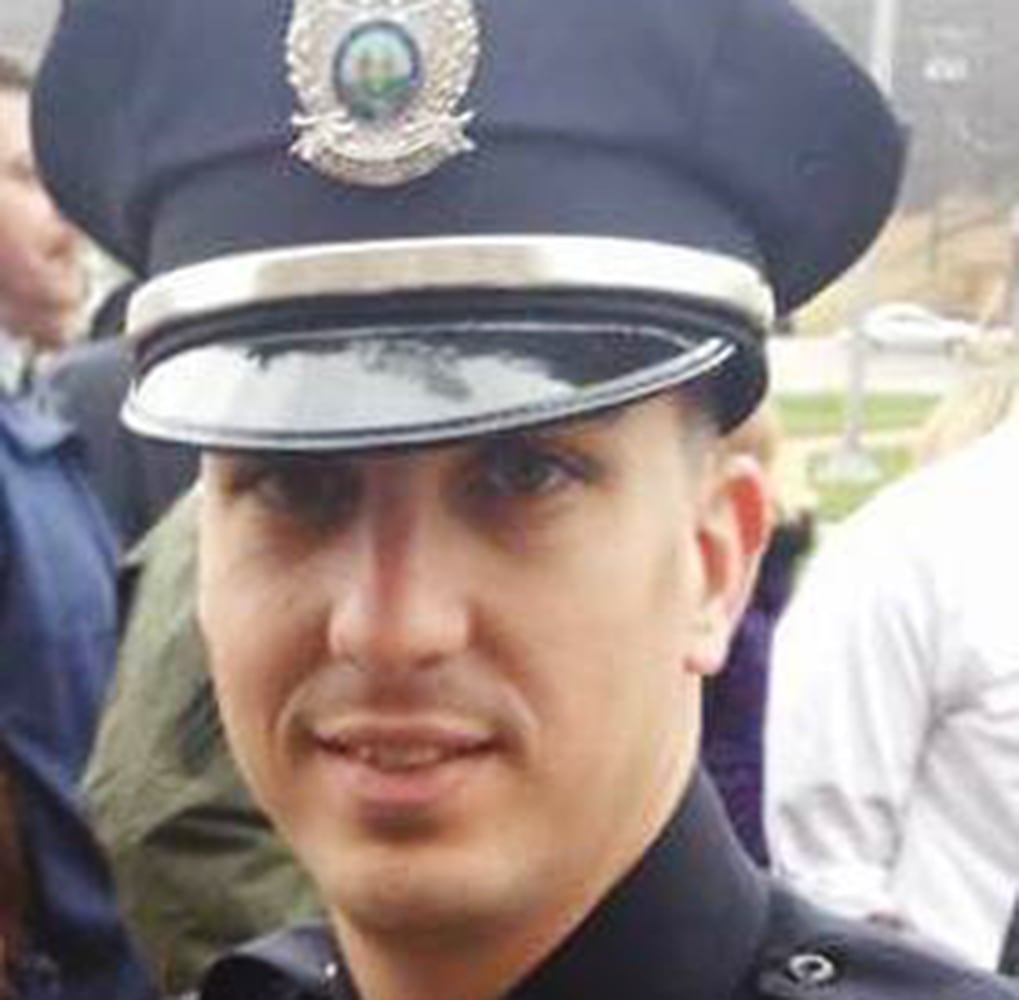
Officer Stephen Mader Stephen Mader via ACLU
Mader says he was let go by the Weirton Police
Department for not shooting the emotionally disturbed Williams during a
domestic disturbance call on May 6, 2016. The incident began when a
female caller said Williams was threatening to hurt himself. Another
officer ended up fatally shooting Williams, 21, just minutes later and
within seconds of arriving at the scene. On Wednesday, Mader filed a
lawsuit against the city of Weirton claiming that he was wrongfully
terminated, that his constitutional rights were violated and that the
city thereafter "engaged in a pattern of retaliation designed to destroy
Mr. Mader's reputation."
The suit was filed on Mader's behalf by the ACLU of West Virginia and attorney Timothy P. O'Brien.
"The City of Weirton's decision to fire
officer Mader because he chose not to shoot and kill a fellow citizen,
when he believed that he should not use such force, not only violates
the Constitution, common sense and public policy, but incredibly
punishes restraint," O'Brien said. "When given the tragic, and, far too
frequent unnecessary use of deadly force, such restraint should be
praised not penalized. To tell a police officer, when in doubt either
shoot to kill, or get fired, is a choice that no police officer should
ever have to make and is a message that is wrong and should never be
sent."
After being fired, Mader gave interviews with
local media and alleges the city almost immediately sought to punish him
through a campaign of press conferences, misinformation and untrue
allegations including falsehoods about his performance during his 10
months on the job when the incident took place.
Weirton City Manager Travis Blosser on Tuesday
said the city hadn't seen a copy of the lawsuit or been made aware of
any allegations made in it.
"From the city's aspect it's really premature
for us to comment and when we do get it, it'll be reviewed by legal
counsel and the determination will be made from there if we will be
making any comments on that particular lawsuit if and when it's filed,"
Blosser said.
Mader, a Marine Corps veteran who served two
tours, one of which was in Afghanistan, said he was overjoyed to begin
working as a police officer in the town where he's spent his entire
life. He graduated from Weirton High School, went off with the military
and returned after being honorably discharged in 2013. In July 2015, he
was hired as a probationary police officer.
Less than a year later, while on duty, Mader
got the call that would change his life and career trajectory. It was a
911 call from a woman reporting that Williams was armed with a knife and
threatening to kill himself. A second call from the woman said that
Williams had gone to the car to get a gun, but that it wasn't loaded.
When Mader arrived at the scene, he found
Williams was emotionally upset and with his hands behind his back. When
he ordered him to show his hands, he was holding a silver handgun.
Still, Williams was never angry or aggressive, just despondent.
Mader said all of his training in the military
and on the police force, all the studying of lethal force and
department policy kicked in. He said he could tell that Williams was
more of a threat to himself than anyone else.
As he worked to de-escalate the situation, he
said the biggest red flag of all went up when Williams uttered the words
that stick with Mader more than a year later: "Just shoot me."
He said it again and again.
"He wasn't screaming, yelling, he wasn't
angry. He just seemed distraught. Whenever he told me to shoot him it
was as if he was pleading with me," Mader said. "At first, I'm thinking,
'Do I really need to shoot this guy?' But after hearing 'just shoot me'
and his demeanor, it was, 'I definitely can't.'"
He said that he was trying to talk Williams
into putting the gun down. "Everything was verbal," he said. That's when
Mader and Williams both saw the police cruiser driving up the road. And
in that moment, when Mader lost his connection with Williams,
everything changed.
The officers stepped out of their cruiser.
Williams started waving his empty gun around in the air. Then, within
seconds, gunfire. Williams fell to the ground with a bullet in his head.
A little more than a week later Mader got word
that the department would be conducting an investigation into the
shooting. He was placed on administrative leave. Then, weeks later, he
was fired. Mader said he never once was interviewed or questioned about
what he did, didn't do or why. Since then he hasn't had any contact with
anyone from the department. But after his story became national news,
officers from across the country and around the globe have sent their
well wishes.
"It's been positive," Mader, 26, said. "When they read the story they are just shocked."
Stephen Mader Stephen Mader via ACLU
Because of his probationary status at the time of the shooting, the police union declined to get involved in his termination.
"There's the thin blue line, and one of the
ironies of this case is that as we've seen across the county how many
instances police have used deadly force in circumstances where that
force is questioned, but nothing is ever done. In most cases you don't
see training or suspension," O'Brien, the lawyer, said. "When you
contrast with what Officer Mader did and how he's been treated, and
officers who've used deadly force and how they've been treated, it
speaks volumes to why we have a problem with deadly force in this
country."
Even as his lawsuit is filed he said he hopes
to one day work in law enforcement again, though he worries if the case
has made him untouchable.
Mader, who has been working with the West
Virginia national guard, has a wife and two little boys, ages 2 and 4.
And he hopes that one day they understand why daddy didn't shoot.
When asked what if there's anything he'd do differently, his answer was simple.
"I wouldn't change anything. Even after them
saying that I failed to eliminate a threat and that it should have been
handled differently, I still believe I did the right thing," Mader said.
"And a lot of people think I did the right thing, too. I know it's not
just me."




No comments:
Post a Comment